


Reviewed by Tom Orr, founder and CEO of Northwest Exteriors · 30+ years in home improvement · CA Contractor License #710798 · Updated November 2, 2026
Vinyl siding typically costs about $3 to $12 per square foot installed, and most whole-house projects land somewhere between $6,000 and $24,000, with a national average around $12,000. Where your home falls in that range depends mostly on how much wall you are covering, the grade of vinyl you choose, and how much work it takes to get the old siding off.
Below is how vinyl siding pricing actually works, what changes the number, how vinyl compares to fiber cement and other materials, and a few Sacramento-specific things worth knowing before you get quotes. The figures are published 2026 national averages, not a quote for your home. If you want an exact price, we measure and price every project at a free in-home estimate.
Vinyl Siding Cost at a Glance
| Item | Typical cost |
|---|---|
| Installed cost per square foot | About $3 to $12 |
| Average whole-house project | About $12,000 |
| Typical project range | About $6,000 to $24,000 |
| Removing old siding (if charged separately) | About $1,000 to $2,500 |
| Labor share of the total | About 30% to 50% |
Vinyl Siding Cost by Grade
Not all vinyl is the same. Thicker panels hold their shape better, look straighter on the wall, and stand up to heat and impacts. That matters in Sacramento, where long summer afternoons are hard on thin, cheap vinyl.
| Grade | Installed per sq ft | 2,000 sq ft of wall |
|---|---|---|
| Builder grade (about 0.040″) | $2 to $6 | $4,000 to $12,000 |
| Standard residential (about 0.042″) | $4 to $7 | $8,000 to $14,000 |
| Premium (about 0.046″) | $6 to $10 | $12,000 to $20,000 |
| Insulated | $7 to $12 | $14,000 to $24,000 |
Insulated vinyl has a rigid foam backing glued to each panel. The foam makes the siding stiffer, straighter, and more impact resistant, and it adds some insulation to the wall. CraneBoard is the insulated vinyl we install most often.
Vinyl Siding Cost by Home Size
Siding is priced by the square footage of wall being covered, which is usually different from your home’s living space. A two-story house has more wall per square foot of floor than a single-story ranch, and big windows and garage doors reduce the area that needs siding. Here is how the numbers play out by wall area:
| Wall area | Typical installed cost |
|---|---|
| 1,000 sq ft | $3,000 to $12,000 |
| 1,500 sq ft | $4,500 to $18,000 |
| 2,000 sq ft | $6,000 to $24,000 |
| 2,500 sq ft | $7,500 to $30,000 |
What Changes the Price
- Grade and thickness. Thicker and insulated panels cost more but look better and last longer.
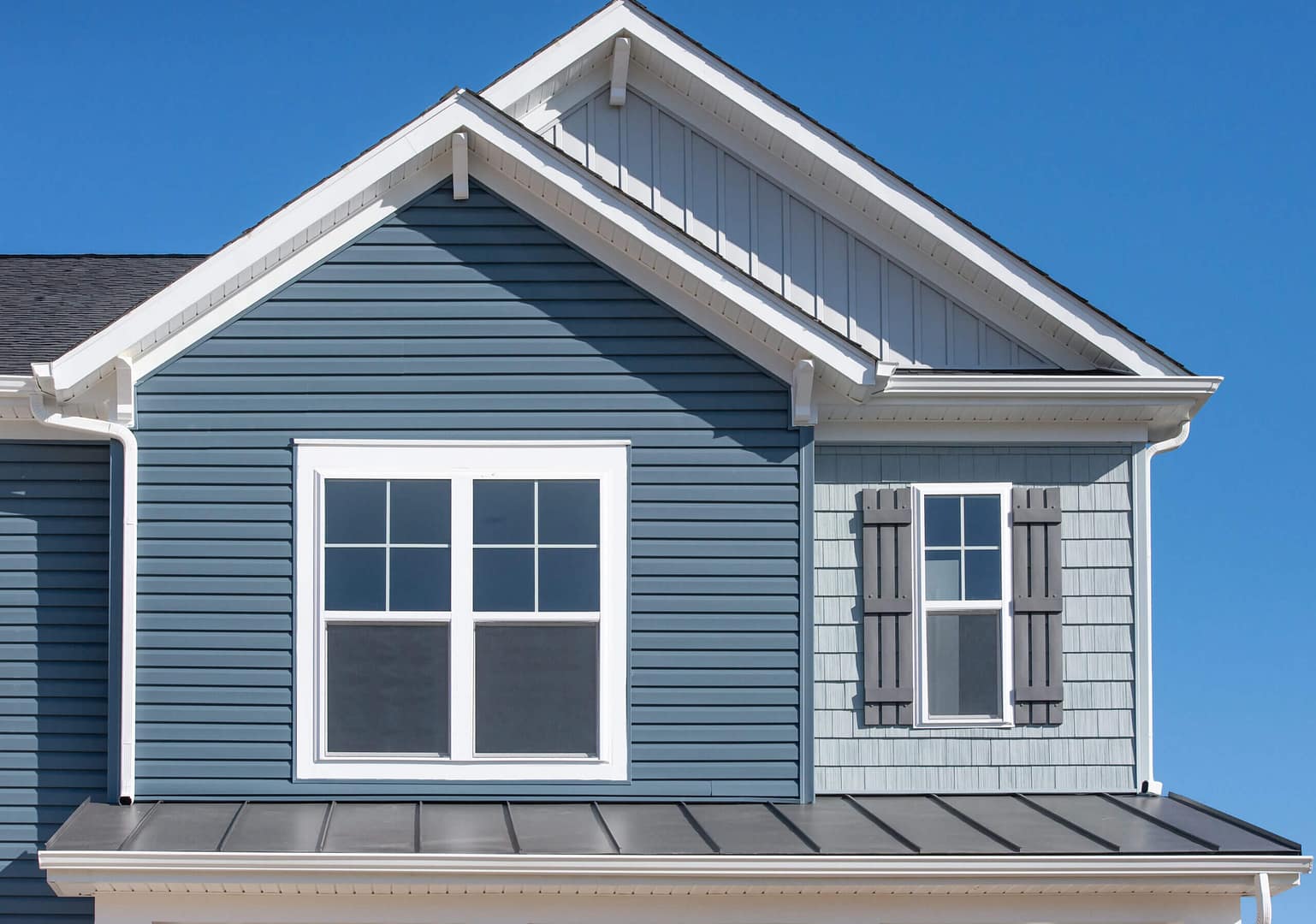
- Style. Traditional lap siding is the most affordable. Board and batten, shake, and stone-look profiles cost more.
- Color. Light colors are standard. Darker colors cost more and need a quality product rated to handle heat.
- Tear-off and repairs. Removing old siding and fixing rotted sheathing underneath adds cost, and older hardboard and T1-11 often hide damage.
- Trim, soffit, and fascia. Wrapping trim and replacing soffits and fascia at the same time adds to the total but gives a cleaner, lower-maintenance finish.
- Stories and access. Second stories, steep slopes, and tight side yards take more time and equipment.
- Permits. Many cities require a permit for re-siding, especially in fire hazard zones.
Siding Replacement Cost: Vinyl vs. Other Materials
If you are comparing materials, here is how vinyl stacks up against the other common options, based on published national data:
| Material | Installed per sq ft | Upkeep |
|---|---|---|
| Vinyl | About $3 to $12 | Wash occasionally, never paint |
| Fiber cement (James Hardie) | About $5 to $18 | Repaint every so often (less with factory finish) |
| Wood | About $5 to $8 | Regular painting or staining |
Vinyl is usually the most affordable way to re-side a house and the lowest maintenance. Fiber cement costs more but does not burn, rot, or melt, which is why we often recommend it for homes in fire hazard areas. See our James Hardie siding page for that comparison.
What Sacramento Homeowners Should Know About Vinyl
- Buy for the heat. Thin builder-grade vinyl can sag and wave on hot south- and west-facing walls. A thicker panel or insulated vinyl holds a straighter line.
- Watch for reflected sunlight. Sun bouncing off a neighbor’s Low-E windows can concentrate enough heat to distort vinyl on some walls. If your home has had that problem, ask about heat-resistant products or a different material for that wall.
- Fire zones matter. Vinyl is combustible. If your home is in a Cal Fire hazard severity zone, common toward Folsom, El Dorado Hills, and Auburn, California’s wildfire building standards may steer you toward fiber cement. We check your address during the estimate.
- Stucco homes. Many Sacramento homes are mostly stucco with siding on gables or upper floors. Replacing just those sections with vinyl or fiber cement is a common, more affordable project.
How to Keep the Cost Down
- Get two or three written quotes that list the same product line, thickness, trim, and tear-off.
- Stick with standard colors and traditional lap profiles if budget is the priority.
- Re-side the whole house at once rather than one wall at a time to avoid repeat setup costs and color-matching problems.
- Ask about financing on approved credit. See our financing options and current specials.
Vinyl Siding Cost: Common Questions
How much does vinyl siding cost for a 2,000 square foot house?
It depends on how much wall area the house has, not the living space. For 2,000 square feet of wall, published data puts vinyl at roughly $6,000 to $24,000 installed, depending on grade. Standard residential vinyl lands around $8,000 to $14,000 for that much wall.
How much does vinyl siding cost per square foot?
About $3 to $12 per square foot installed. Builder-grade vinyl sits at the low end, and premium and insulated vinyl sit at the high end.
Is insulated vinyl siding worth the extra cost?
Often, yes. Insulated vinyl costs more, but the foam backing makes it stiffer and straighter on the wall, more impact resistant, and better at holding up in summer heat.
Is vinyl cheaper than fiber cement siding?
Usually. Vinyl runs about $3 to $12 per square foot installed, compared with roughly $5 to $18 for fiber cement. Fiber cement costs more but is noncombustible, which matters in fire hazard areas.
How long does vinyl siding last?
Quality vinyl siding that is installed correctly can last for decades. Thicker panels and good installation, with proper room for expansion in hot weather, make the biggest difference.
Does it cost extra to remove old siding?
Sometimes. Removal and disposal often runs about $1,000 to $2,500 when it is charged separately, and many contractors include it in the installation price. Any rot repair underneath is extra.
Get an Exact Siding Price in Sacramento
We will measure your walls, show you samples of vinyl and fiber cement, check whether your address is in a fire hazard zone, and give you a written price. Call 916-727-6717 or request your free estimate online. You can also learn more about our Sacramento siding contractors.
Cost figures on this page come from published data from Fixr (updated January 2026), This Old House (updated June 2026), and Angi. Fiber cement and wood figures come from This Old House and Angi. Your price depends on your home.
About the reviewer: Tom Orr founded Northwest Exteriors in 1995 and has led the company as CEO for more than 30 years. Under his direction, Northwest Exteriors has installed windows, entry doors, and siding for homeowners across California and Hawaii. California Contractor License #710798.
Tom Orr founded Northwest Exteriors in 1995 and has led the company as CEO ever since. In more than 30 years in home improvement, he has built Northwest Exteriors into a trusted name for replacement windows, entry doors, and exterior siding for homeowners across California and Hawaii.
Tom’s focus has always been the same: energy-efficient products that make a home more comfortable and better looking, installed by crews who do the job right and treat customers well. California Contractor License #710798

